A city can enter a landscape poem without becoming the thing the landscape excludes. In Wordsworth’s Westminster Bridge sonnet, the urban view receives the morning’s beauty, and its structures remain open to fields and sky. Reading all fourteen lines in the Academy of American Poets transcription, I hear a movement from a confident judgment toward a more personal astonishment. This is an interpretation of that text, not an account of visiting London.
The first judgment makes passing by a choice
The opening declares the view exceptionally fair before identifying its separate parts. The next lines imagine someone able to pass without responding and judge that person’s capacity to feel. I find that sequence unusually demanding: the sight arrives already accompanied by a claim on its observer.
My reading question is therefore not simply which landmark looks prettiest. It is how the voice makes attention seem necessary. A margin note could place the initial assertion beside the imagined passerby, then ask whether the insistence feels generous, commanding or both. The poem leaves room for that disagreement without supplying a modern itinerary.
A garment does not seal the city off
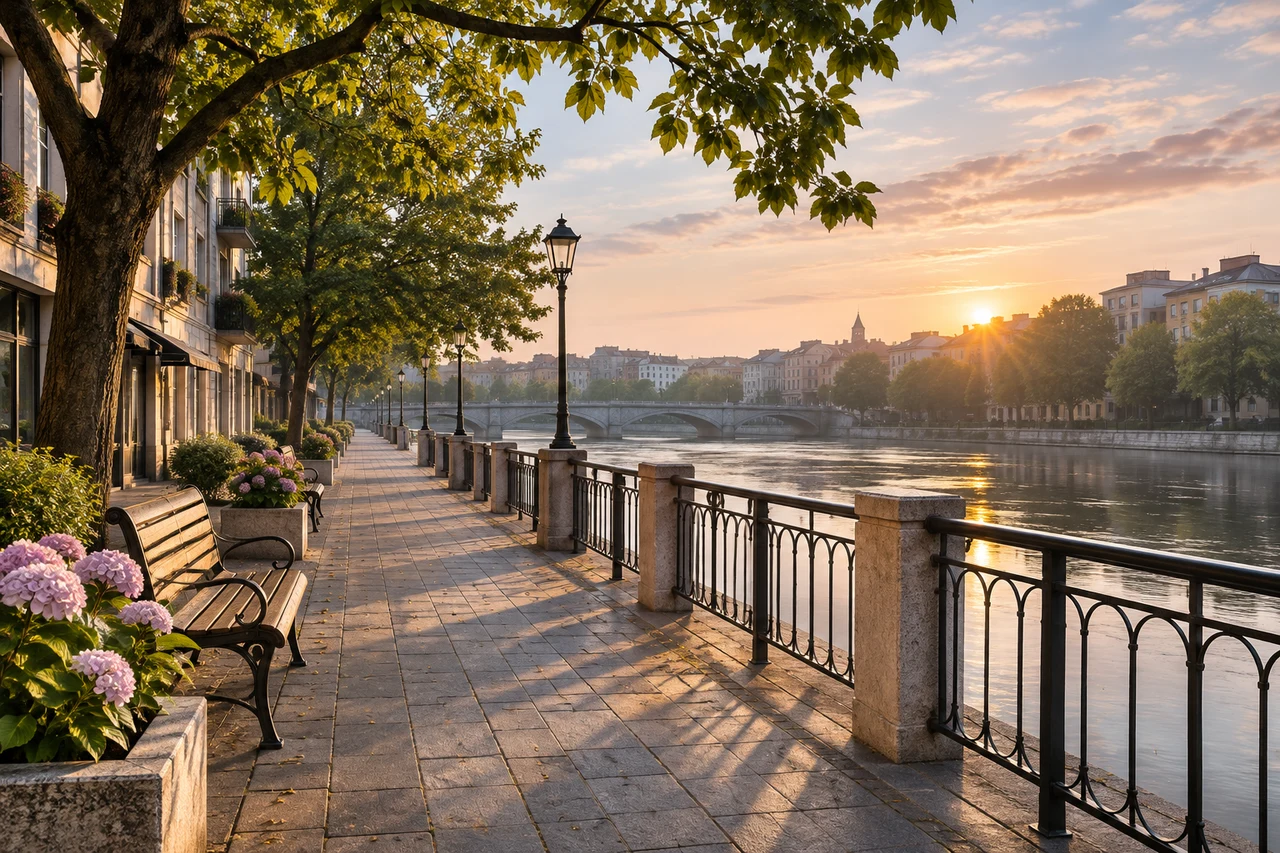
The city’s morning garment is followed by structures presented as open to what surrounds them. Ships and buildings belong within the field of vision rather than blocking access to every other element. The list gathers different urban forms, while the sky gives them a shared exposure.
I read the garment image beside that openness. Clothing might suggest covering, yet here the morning makes the view available. That tension is more interesting to me than a general claim that the city has become natural. The actual words retain its built forms; the sonnet does not have to erase them to praise the scene.
The comparison returns through a particular observer
The next movement brings valley, rock and hill into the comparison before the voice announces the depth of its own calm. Those natural places do not prove the city inferior. Instead, their appearance helps measure how striking this urban morning feels to the speaking observer.
The shift into personal seeing and feeling matters. The enormous opening judgment becomes tied to an experience the voice claims. That is still a lyric claim, not a reading of the author’s medical condition or evidence that a walk will produce the same response in everyone. I would keep the scale of the assertion and the location of the voice visible together.
Let the river move beside the sleeping heart
The river receives its own willing movement before houses appear asleep and the city becomes a still heart. To me, the ending holds motion and rest within one view rather than making stillness identical with lifelessness. A heart described at rest still carries the possibility of activity beyond this moment.
The Academy identifies the poem as public domain. A complete free text is enough for this discussion; an illustrated edition should identify its text and the contribution its notes actually make. No source artwork, historic view or present-day air-quality claim is reproduced. Read the final stillness back through the opening demand for attention before reducing the sonnet to a postcard caption.
Sources & further reading
Published sources for the details and examples discussed in this story.