A sculpture can keep the same parts while giving a second photograph a different outline. For this comparison, we actually examined two National Gallery of Art photographs of Auguste Rodin’s The Walking Man, accession 1942.5.11. This is an online close reading, not a visit or a report of walking around the bronze. The two available views allow a modest question: what changes when the same torso, legs and base are seen from another direction? They do not give us every side of the object.
Start with the exact object, not any cast with the same title
The National Gallery records this bronze as a model of 1878–1900, cast probably in 1903, and credits the Gift of Mrs. John W. Simpson. That qualification matters: probably is part of the supplied dating, not an uncertainty for us to remove. Other museums hold works with the same title. Their records and photographs should not silently replace this particular object in a two-view comparison.
Our first image is the Gallery’s frontal photograph. The second is its oblique side photograph, identified by separate image links on the same object page. Calling them first and second describes our comparison order, not a required route around a museum installation. Their studio backgrounds and camera choices are also part of what we see. No conclusion here depends on an imagined gallery position or current display arrangement.
First view: read the opening between the legs
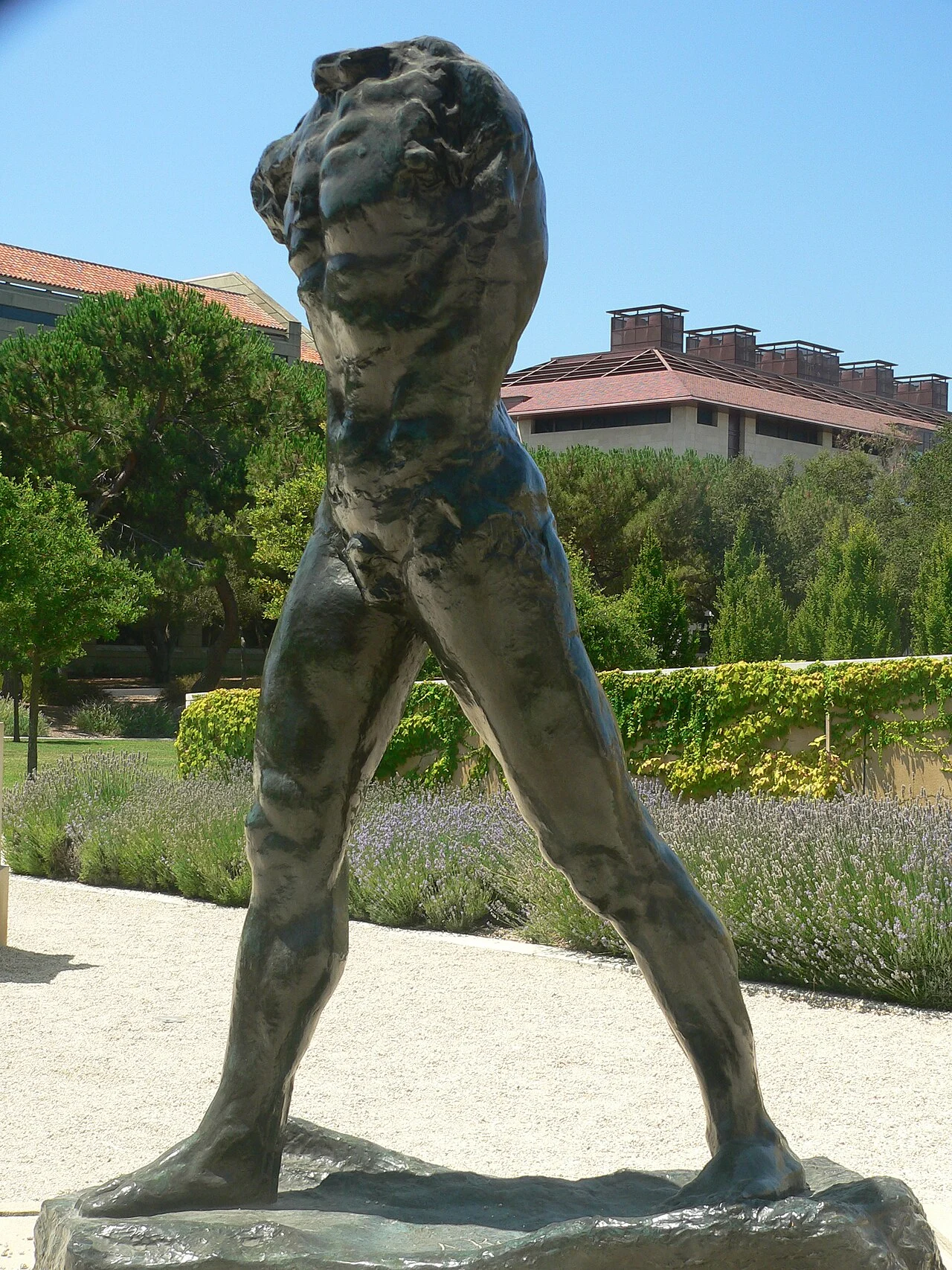
In the frontal photograph, the torso’s chest and abdomen face toward the camera. Its upper edge is broken rather than completed by a head and neck. The arms are absent, while the legs extend to two different positions on the rough base. One foot, on the left side of this photograph, projects more toward the viewer; the other reaches across toward the right.
The open area between the legs is particularly useful to notice. It is a tall, tapering wedge of background bounded by the thighs and lower legs. The background is not a piece of bronze, yet its shape helps me describe how the figure occupies the image. Instead of immediately naming an emotion, I can follow where the gap narrows at the top and broadens toward the base.
Surface highlights make ridges and irregularities visible across the chest and thighs. They should not be mistaken for a map of the object’s permanent colors: illumination and the camera affect those bright areas. For this first look, I would keep three notes separate: the missing upper parts, the opening between the legs and the way the two feet meet the base.
Second view: keep the parts, revise the outline
The oblique photograph makes the torso look narrower around the waist. The upper broken surface is more visibly slanted, and a different side of the trunk occupies the outer contour. The nearer leg descends toward the right side of the image, while the other reaches back toward the left. The feet and the top surface of the base now sit in a different visual relation.
There is still a large opening between the legs, but its boundaries no longer make the same frontal wedge. The change is not evidence that a limb moved between photographs. The camera has changed what overlaps and what remains separate. A foot that seemed to project out toward us in the first image now contributes to a more lateral spread across the base.
For me, the second view changes the question from how widely the legs separate to how the torso is supported between their different directions. That is my description of the photographed relationships, not a biomechanical assessment. A bronze figure does not become an example of safe standing posture, and a photograph cannot supply a load or balance calculation.
Make a second-view note before buying a single-view image
A useful observation prompt has three parts: name one contour that changes, one gap that changes and one feature that remains identifiable. Here, the torso’s outline changes; the opening between the legs changes; the fragmented torso and two planted feet remain recognizable. Those statements are grounded in the two images we actually examined. They leave unseen rear surfaces and any intended meaning unresolved.
If you are choosing a book, print or other reproduction because one photograph interests you, look for another documented view of that exact object before treating the first as its complete shape. Check the reproduction’s actual image, scale, rights and purchase conditions separately. A second view may deepen the interest, or reveal that what you particularly like is the first photograph’s composition. Neither outcome requires buying a second object.
The point is not to replace looking with an inventory of official facts. A precise object record keeps the comparison honest, then the photographs allow a personal visual judgment. I would return to the gap between the legs on a later look, because it changes substantially without adding or removing a single part of the bronze.
Sources & further reading
Published sources for the details and examples discussed in this story.