A raised shape on a plaque and a separate round form can share a subject while organizing space differently. The National Portrait Gallery defines sculptural relief as a raised image projecting from a flat background and distinguishes it from freestanding sculpture. That gives a small looking note a useful question: is the backing part of the work's physical relation, or is the background simply whatever happens to be behind a separate object?
| Original imagined object | Background relation |
|---|---|
| Raised circle on a clay panel | Flat backing is attached within the proposed object |
| Separate sphere before a wall | Wall is scenery, not the stipulated attached backing |
Keep the backing in the description
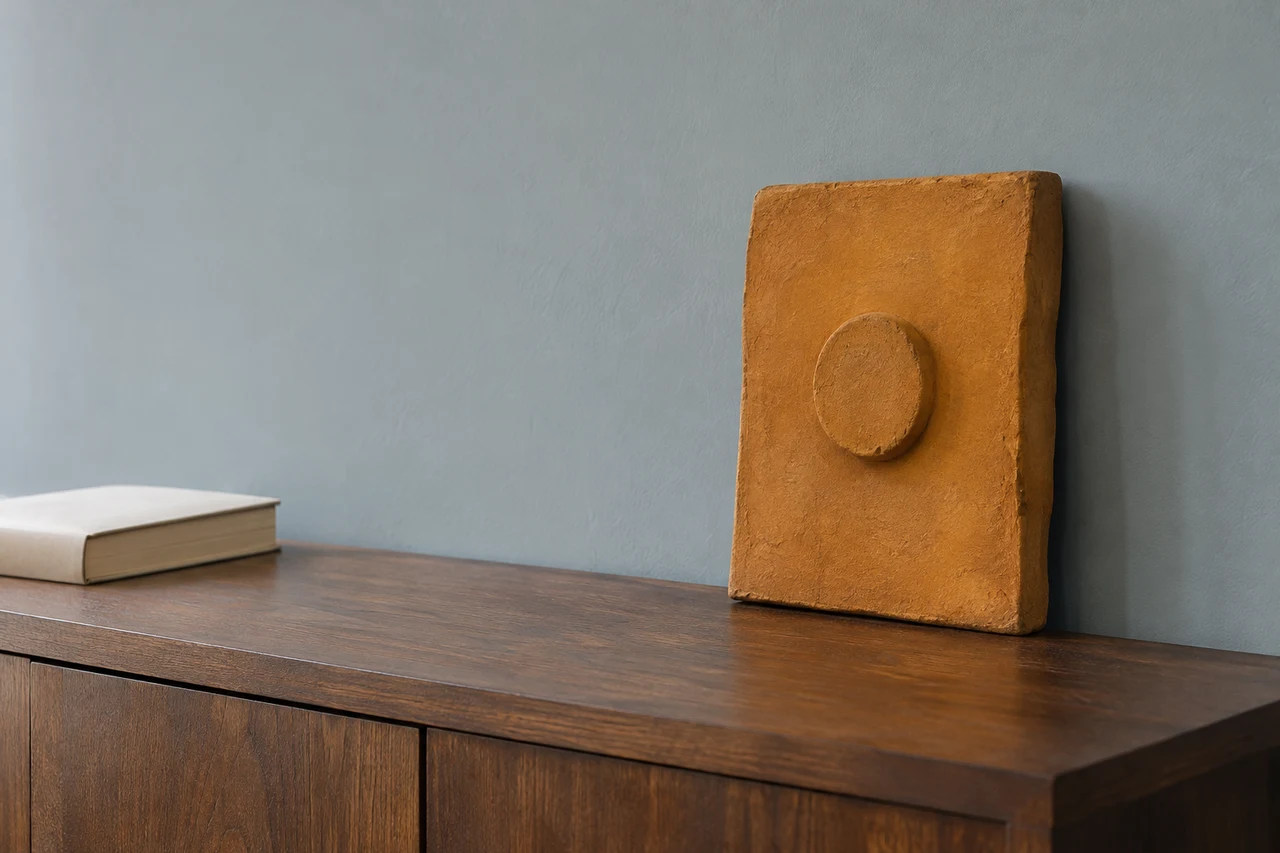
Imagine an entirely fictional clay panel with a raised circular form attached to its flat face. In this proposal, the circle is not a separate ball placed in front of a board. The raised form and its backing belong together. Describing only a circle would leave out the relationship the relief definition helps us notice.
Now imagine a separate plain clay sphere resting on its own base. A wall may appear behind it in a photograph, but that wall is not stipulated as an attached backing to the sphere. These are invented examples for comparing the relation, not objects we made, handled or examined in a collection. No material technique or installation method is supplied.
A photograph has a background too
The distinction is useful because the word background can do two jobs. It can name an attached flat ground in the proposed relief, or describe an area behind an object within a photograph. Do not assume those must be the same thing merely because both occupy the space around a visible shape.
For an original two-line note, write what is attached and what is only visible behind. In the fictional panel, the raised circle is attached to the flat backing. In the sphere photograph, the room's wall is only stipulated as scenery behind the independent object. An actual artwork needs its own evidence; this note cannot identify hidden construction from an ambiguous thumbnail.
Let the term improve a purchase question
If choosing a sculpture book or a reproduction, ask whether the supplied view and description let you understand that relationship. A cropped detail may attract you precisely because it removes the backing from view. That can be a visual preference, while leaving the physical nature of the original unresolved.
Check the exact object record, image and rights before commissioning any reproduction. This article identifies no artist, date, technique, current display or usable museum image. Nor does relief mean less accomplished than a freestanding work. Its value here is descriptive: it keeps an attached background from disappearing out of the sentence. A better caption or another documented view may answer the question before a larger book or print order is needed.
Sources & further reading
Published sources for the details and examples discussed in this story.