One person is taking off a damp coat while another looks for keys, and yesterday’s shoes have claimed the space behind the door. A small apartment entrance does not need to hold everything you own. It needs to receive the things that arrive every day and let people move past them. Start with that routine before buying a bench or another basket.
Trace the door swing and the daily route
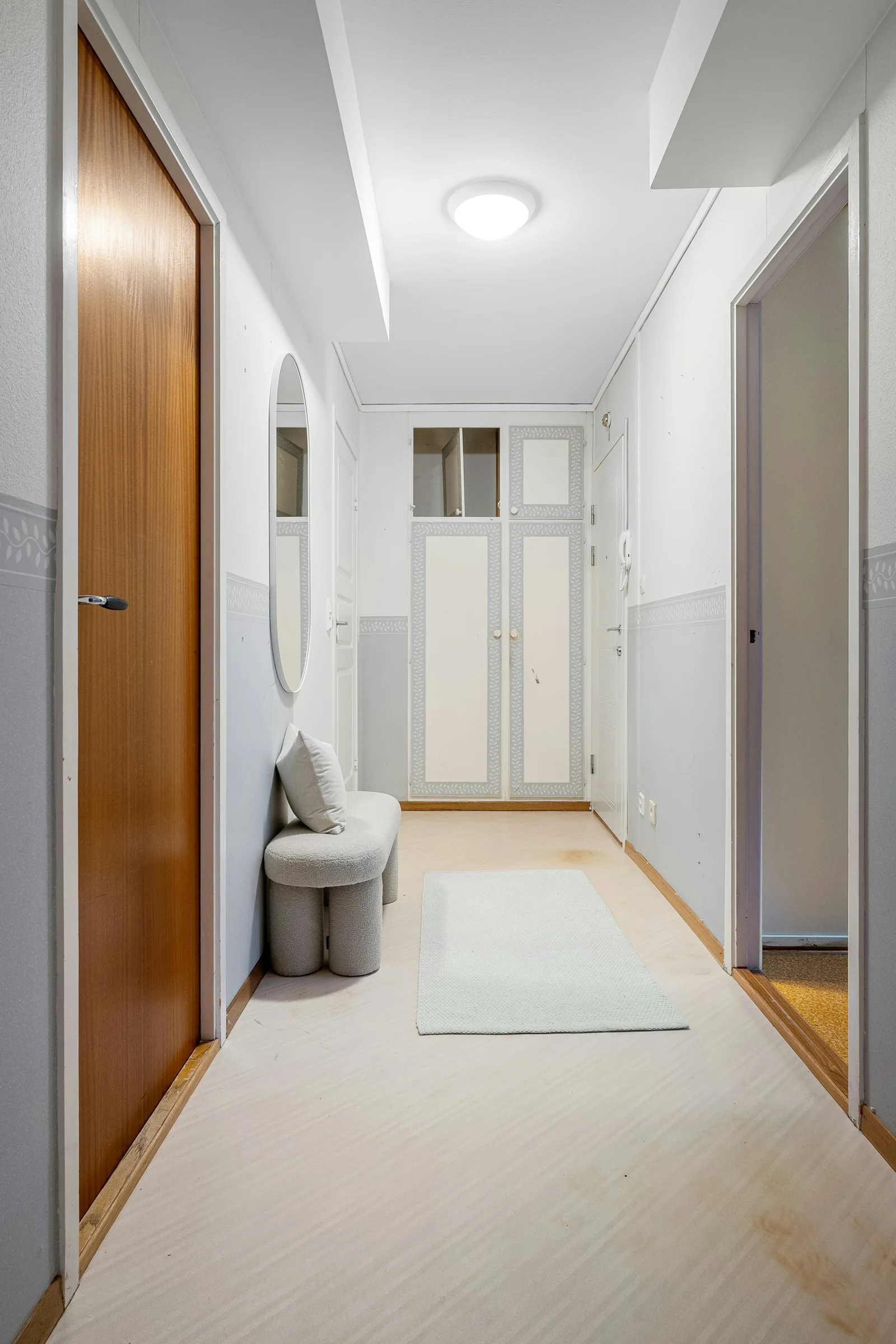
Open the front door fully and notice what it approaches. Repeat with nearby cupboard doors and the route toward the rest of the apartment. A shallow cabinet can fit a wall perfectly and still interfere with a handle, a shoulder bag or the place where another person waits.
Measure usable space after accounting for those movements. Mark a possible furniture footprint with removable tape and live with the outline for a day. This is a practical check of your own routine, not a building-code assessment. Preserve required access and follow lease or building rules.
Give wet things a temporary place
A washable boot tray can separate damp soles from the rest of the floor, provided it fits the entrance and is emptied and cleaned. Choose an edge you can wipe and a size based on shoes in regular use. A tray intended for a generous mudroom can overwhelm a city hall.
Choose a mat suitable for the floor and follow both products’ care guidance. Check that the door moves over it and use an appropriate slip-resistant backing or underlay where needed. A rug that bunches when someone turns is adding work instead of making the entrance welcoming.
Store the current rotation
Choose daily shoe spaces and move occasional footwear elsewhere. Open shelves make it easy to see what is available. Closed cabinets reduce visual clutter but require you to check internal depth and ventilation. Neither compensates for keeping twice as many shoes as it can hold.
IKEA’s hallway material shows narrow shoe storage and wall-based organization. Treat these as comparison ideas rather than a complete shopping list. Your tallest boots, widest shoes and actual wall construction still decide whether a particular arrangement will work.
Decide whether a bench earns its footprint
A seat is useful when someone regularly sits to change shoes. A narrow perch may be enough. An upholstered storage bench offers a different experience but needs more space and care around damp coats. Verify its dimensions and maker’s load information rather than assuming every small bench is suitable.
If seating blocks the passage, consider a seat elsewhere and a slimmer landing spot for keys. Furniture with two functions is not automatically efficient if neither works well. A storage lid that cannot open beneath hanging coats is a familiar example of that compromise.
Place hooks around real coats and bags
Hold your longest everyday coat and fullest work bag at the proposed position. Would they hide a light switch, hit the bench or trail into the walking route? Keep items reachable for the people using them instead of treating identical spacing as the main objective.
Before mounting anything, identify the wall type, permitted fixing method and manufacturer’s load guidance. Renter-friendly products still have surface and weight limits. A heavy coat collection calls for an appropriate fixing rather than several adhesive hooks and wishful thinking.
Make the reset small enough to repeat
A key tray, one place for a work bag and a small outgoing-items basket are easier to maintain than decorative containers with overlapping jobs. Remove papers and shopping bags that do not belong there in the evening. The entrance should be ready for tomorrow rather than become a permanent holding area.
Try the routine with things you already have. After a week, buy only the piece that removes a specific inconvenience. The useful upgrade may be a narrower shoe rack, a better-fitting mat or one dependable hook instead of a completely new furniture scheme.
Useful places to look
Sources & further reading
Published sources for the details and examples discussed in this story.